Blog

Studio Tour

Posted on: Saturday, January 20th, 2001
Posted in: RTW Travelog, Blog, New Zealand | Leave a comment
  • Waiheke Island, New Zealand.

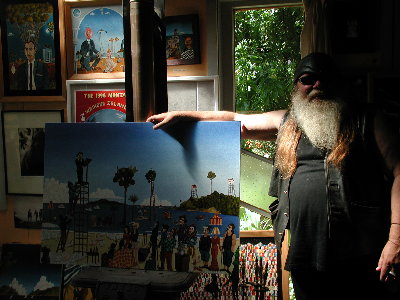
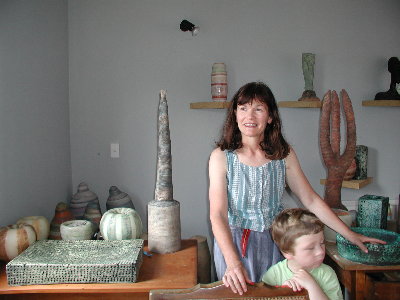
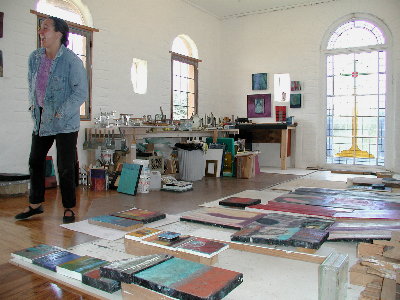
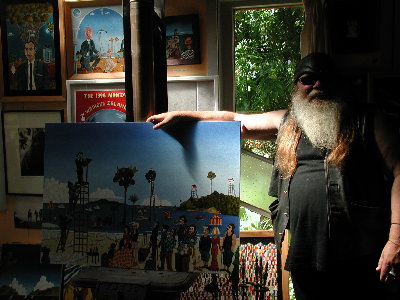
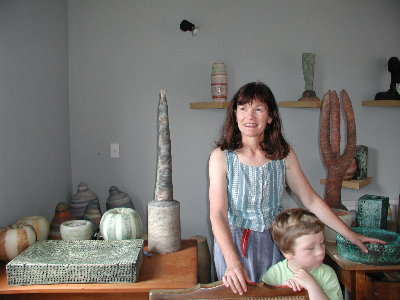
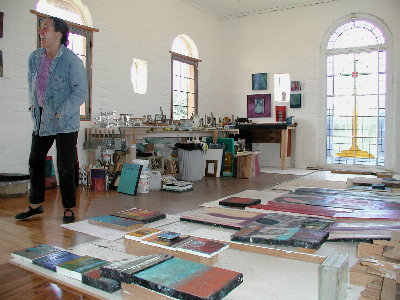
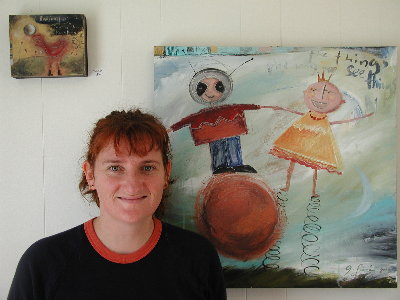
For weeks, we´d been admiring the work at the community art gallery. So when we found out that many local artists welcomed visitors to their studios, we were keen to go (as they´d say here).

On this fine summer day we traversed the island, visiting studios tucked in the village, perched over vineyards, overlooking the sea, and nestled in the bush. It was fascinating to enter the work spaces (all so different!), meet the artists (equally eclectic), and see all the creativity that this place has directly or tangentially inspired. Here are a few of the people we met.

Studio Tour

Posted on: Saturday, January 20th, 2001
Posted in: 5th Stop: New Zealand, The RTW Tour, 2000-01 | Leave a comment

Studio Tour

1/20/01: Waiheke Island, New Zealand

Artists Ingrid

For weeks, we’d been admiring the work at the community art gallery. So when we found out that many local artists welcomed visitors to their studios, we were keen to go (as they’d say here).

On this fine summer day we traversed the island, visiting studios tucked in the village, perched over vineyards, overlooking the sea, and nestled in the bush. It was fascinating to enter the work spaces (all so different!), meet the artists (equally eclectic), and see all the creativity that this place has directly or tangentially inspired. Here are a few of the people we met.

Artists Mike

Artists Christine

Artists Gabrielle

The 2 Heads Oceania Office

Posted on: Wednesday, January 17th, 2001
Posted in: 5th Stop: New Zealand, The RTW Tour, 2000-01 | Leave a comment

1/17/01: Waiheke Island, New Zealand

Oceania Office

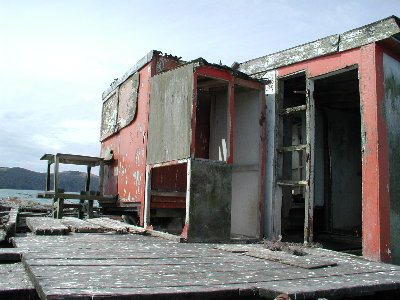
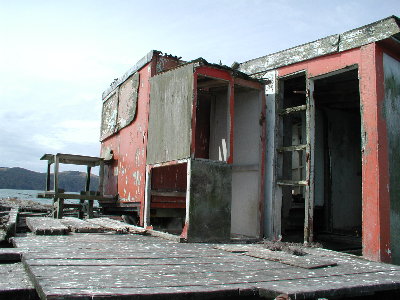
Many people ask us how we’re able to work and be productive in the midst of a big vacation. Well, the secret is this: by creating a dedicated work space that is organized, ergonomic and physically removed from all hedonistic temptations.

Here, for the first time, is a photo of the place where all 2H activity has taken place during the months of December and January. (Note: We’re still waiting for the Aeron chairs to arrive.)

The 2 Heads Oceania Office

Posted on: Wednesday, January 17th, 2001
Posted in: RTW Travelog, Blog, New Zealand | Leave a comment
  • Waiheke Island, New Zealand.

Many people ask us how we´re able to work and be productive in the midst of a big vacation. Well, the secret is this: by creating a dedicated work space that is organized, ergonomic and physically removed from all hedonistic temptations.

Here, for the first time, is a photo of the place where all 2H activity has taken place during the months of December and January. (Note: We´re still waiting for the Aeron chairs to arrive.)

Ice Cream (You Scream)

Posted on: Monday, January 15th, 2001
Posted in: 5th Stop: New Zealand, The RTW Tour, 2000-01 | Leave a comment

1/15/01: Waiheke Island, New Zealand

Ice Cream

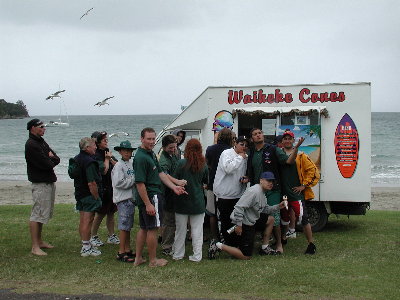
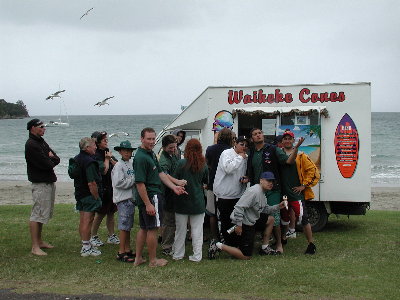
NZ dairy is a big international enterprise, and ice cream is the national prize. In fact, Kiwis are the world’s #2 per-capita-consumers of the sweet stuff.

They empty the freezers of the corner food shops (called dairies), whose exteriors are emblazoned with colorful ice-cream logos. They argue about the best brand and flavor. (Our son favors a concoction called Hokey Pokey.) And they come running when they hear the happy sound (Ta ra rah Boom-dee-yay!) of the ice cream truck that plies Waiheke’s streets and beaches daily. (P.S. The #1 per-capita ice-cream consumption nation? U.S.A.! U.S. A.! U.S.A.!)

Ice Cream (You Scream)

Posted on: Monday, January 15th, 2001
Posted in: RTW Travelog, Blog, New Zealand | Leave a comment
  • Waiheke Island, New Zealand.

NZ dairy is a big international enterprise, and ice cream is the national prize. In fact, Kiwis are the world´s #2 per-capita-consumers of the sweet stuff.

They empty the freezers of the corner food shops (called dairies), whose exteriors are emblazoned with colorful ice-cream logos. They argue about the best brand and flavor. (Our son favors a concoction called Hokey Pokey.) And they come running when they hear the happy sound (Ta ra rah Boom-dee-yay!) of the ice cream truck that plies Waiheke´s streets and beaches daily. (P.S. The #1 per-capita ice-cream consumption nation? U.S.A.! U.S. A.! U.S.A.!)

Music, Music Everywhere

Posted on: Saturday, January 13th, 2001
Posted in: 5th Stop: New Zealand, The RTW Tour, 2000-01 | Leave a comment

Music, Music Everywhere

1/13/01: Waiheke Island, New Zealand

nzlm0

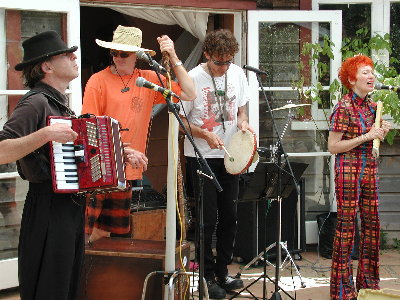
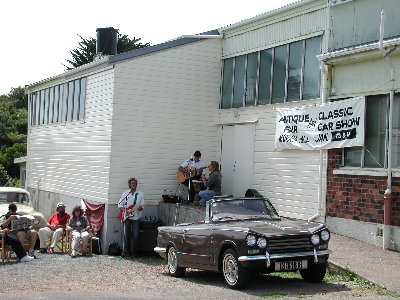
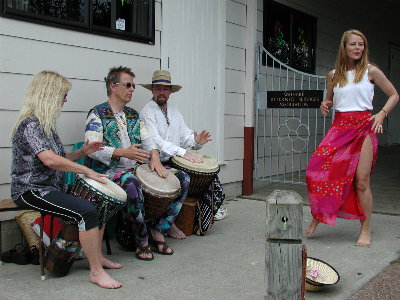
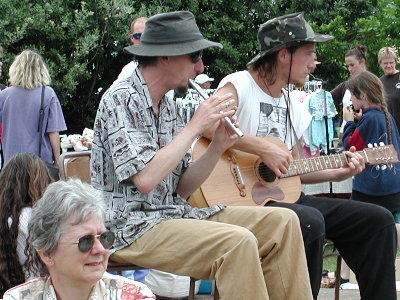
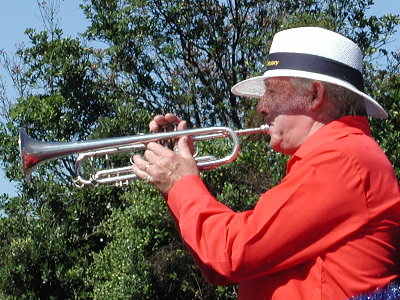
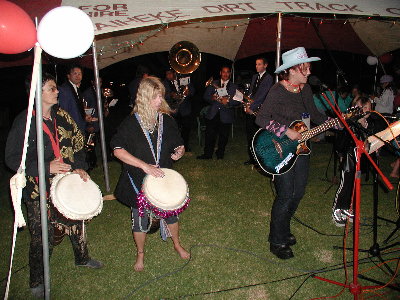
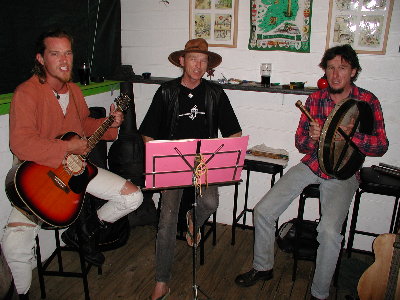
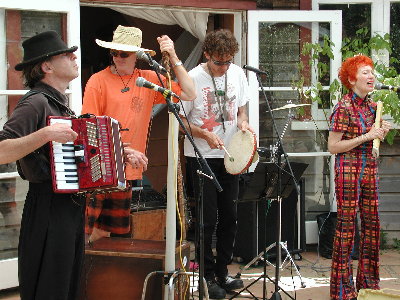
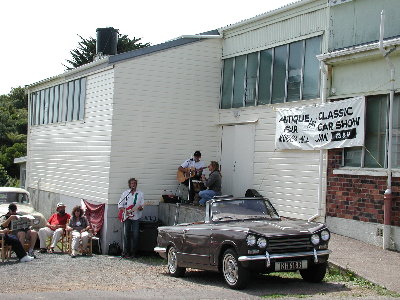
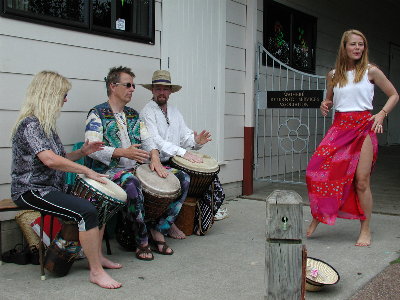
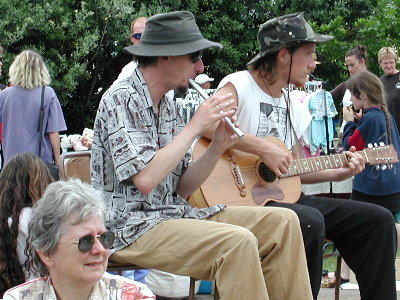
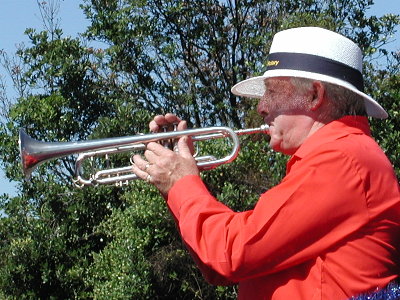
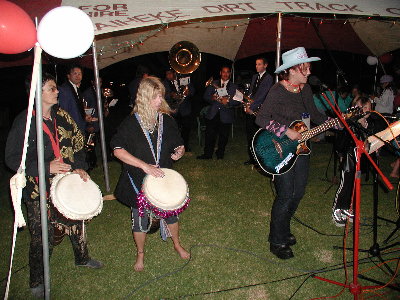
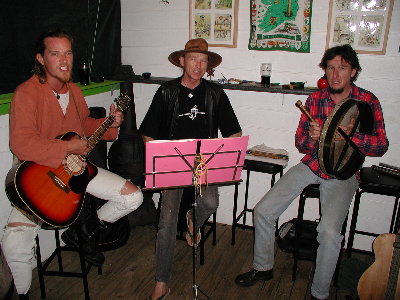
We’ve been delighted to find that live music often fills the air here. Whether it’s a young girl’s recorder warbling “Greensleaves” at the Saturday morning market, or the Plastic Paddies leading the crowd through “Cockles & Mussels” at Molly Malone’s, you can stumble upon harmonious scenes most anywhere.

This is a welcome change from Italy, our trip’s other primary placement. There, we’re told, live musicians must pre-register, pay a tax, and answer to a copyright official who patrols performances. It’s doubly sad because Italy is one place where people commonly carry guitars—and can sing along to opera on the radio. Here, making a joyful noise is still legal. Alleluia!

nzlm1

nzlm2

nzlm3

nzlm4

nzlm5

nzlm6

Music, Music Everywhere

Posted on: Saturday, January 13th, 2001
Posted in: RTW Travelog, Blog, New Zealand | Leave a comment
  • Waiheke Island, New Zealand.

We´ve been delighted to find that live music often fills the air here. Whether it´s a young girl´s recorder warbling “Greensleaves” at the Saturday morning market, or the Plastic Paddies leading the crowd through “Cockles & Mussels” at Molly Malone´s, you can stumble upon harmonious scenes most anywhere.

This is a welcome change from Italy, our trip´s other primary placement. There, we´re told, live musicians must pre-register, pay a tax, and answer to a copyright official who patrols performances. It´s doubly sad because Italy is one place where people commonly carry guitarsÑand can sing along to opera on the radio. Here, making a joyful noise is still legal. Alleluia!

Interview: Bob the Artist

Posted on: Wednesday, January 10th, 2001
Posted in: 5th Stop: New Zealand, The RTW Tour, 2000-01 | Leave a comment

Interview: Bob the Artist

1/10/01: Waiheke Island, New Zealand
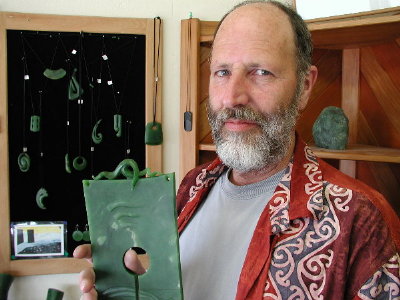
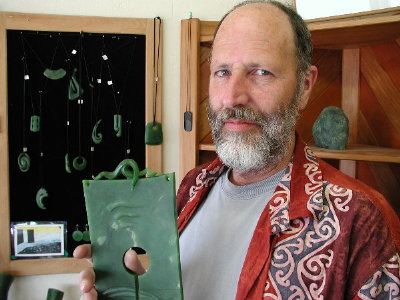
Bob Jade

A month ago, we met James the Gardener. Today, we introduce you to another Waiheke resident, a local artist who creates and sells his works at a main street studio/shop called Jade Jade Jade. The shop is always busy. And his pieces are so distinctive that wearing one turns out to be a great way to meet people on the island.

Interview: Bob the Artist

Q: Every time I come into your shop, there are new pieces. How many do you make?
A: I make about six big pieces—that can each take up to a month—each year. Then I make about five smaller items each week, plus an occasional quite small and cheap—for the marketplace.

Q: Most of the smaller pieces are pendants that people wear; do you think of them as jewelry?
A: No, they’re little sculptures. They’re ideas that hang. I’m not really interested in decoration, and don’t really understand the world of jewelry.

Q: I’ve noticed that a lot of people in New Zealand wear jade. Why?
A: Mostly because of the Maoris, our native people, and their traditional use of it. To them, jade is the most valuable treasure. It’s the touchstone for their ancestors, and embodies the manna of their people.

Q: Is that true elsewhere? Or with any other stone?
A: It’s more true with jade than any other stone. And it happens in China, Europe, and Central America.

Q: What do you think makes jade so extraordinary?
A: It’s so durable they made axes with it in Neolithic times. And time has made it special. Jade is metamorphic, and goes through transformations you can see. There’s a story and history in each rock; it’s slow, fast, pure, and corrupt.

Q: How do you create your pieces?
A: Sometimes I start with an idea and sometimes the idea finds me. Each rock determines it, really. I have to find the story. It’s always a challenge. And the finished product is never as good as the primary idea.

Q: Is there a particular type of person who buys or wears jade?
A: Not at all. Even businessmen in Auckland wear them under their suits. It has nothing to do with their culture, wealth, or age.

Q: What do you think it means to people?
A: People wear it as a talisman. It’s a token of one’s connection with the earth, and of a migratory, nomadic people.

Q: What do you mean?
A: New Zealand was last place on earth to be colonized—the end of the line. When you live here, that imbues your sensibility. Jade is a way of finding commonality with our people back to the first Polynesians.

Q: How does that affect the forms you make?
A: Jade carving is the quintessential art of expressing that. I seek dynamic forms—curvilinear, infinite, open, and not tied down.

Q: Do you think your customers understand that?
A: I think so. I insist that the buyer knows what I was intending. That sounds egocentric, and I don’t mean it that way. Most people respond to the pieces and can’t even articulate why. But something touches them and they open up.

Q: Is that one of the perks of your job?
A: Very much so. I get to see what rhythms move people. It’s not immediate; it’s a spiritual thing—in the hearts of the people.

Q: Which gets back to jade helping people find a connection with the earth?
A: Yes. On the surface, it’s part of an environmental movement here. But I think it runs deeper. It’s part of our essence, and it’s coming back after fading for a while due to pressure from the American culture.

Q: What do you think might be the essence of American culture?
A: America is full of hope, always has been. But unfortunately, the way that’s presented now is materialistic hope.

Q: How do you stay inspired to do this every day?
A: If I’m going to spend a day or two on one piece, I need an idea—a good one. This is my way of reverence, of praying. What I do is quite monkish, really. So my body looks after itself, and I almost never lose interest or get tired.

Q: Have you always lived on Waiheke?
A: No, I was brought on across the way on the mainland. On the beach, really. Waiheke was on the horizon—where the moon came up.

Q: So how’d you end up here?
A: I’d been living and working in the city. The jobs weren’t working out, including one at the City Art Gallery. I couldn’t subject my children to the corruption and pretension of that world. So we came here.

Q: The art world was not for you?
A: Not at all. After I left, I didn’t visit a gallery or pick up an art book for 25 years. I do now. But I still have a distaste for the arty-farty world.

Q: Is this a better place to raise children?
A: Oh, yes. There is an enormous wonder throughout your life when your childhood is close to nature. I can’t imagine the emotional loss for children brought up in an apartment.

Q: And how’d you end up doing jade?
A: I had studied some sculpture, years ago. But when someone gave me some jade, I didn’t have to learn. I was making pieces within six weeks. I think I’d been waiting a long time.

Q: And I’ve kept you from your work for a long time. Thanks for sharing.
A: My pleasure. Enjoy your jade.

Interview: Bob the Artist

Posted on: Wednesday, January 10th, 2001
Posted in: RTW Travelog, Blog, New Zealand | Leave a comment
  • Waiheke Island, New Zealand.

A month ago, we met James the Gardener. Today, we introduce you to another Waiheke resident, a local artist who creates and sells his works at a main street studio/shop called Jade Jade Jade. The shop is always busy. And his pieces are so distinctive that wearing one turns out to be a great way to meet people on the island.

  • Interview: Bob the Artist

Q: Every time I come into your shop, there are new pieces. How many do you make?
A: I make about six big pieces—that can each take up to a month—each year. Then I make about five smaller tems each week, plus an occasional quite small and cheap—for the marketplace.

Q: Most of the smaller pieces are pendants that people wear; do you think of them as jewelry?
A: No, they´re little sculptures. They´re ideas that hang. I´m not really interested in decoration, and don´t really understand the world of jewelry.

Q: I´ve noticed that a lot of people in New Zealand wear jade. Why?
A: Mostly because of the Maoris, our native people, and their traditional use of it. To them, jade is the most valuable treasure. It´s the touchstone for their ancestors, and embodies the manna of their people.

Q: Is that true elsewhere? Or with any other stone?
A: It´s more true with jade than any other stone. And it happens in China, Europe, and Central America.

Q: What do you think makes jade so extraordinary?
A: It´s so durable they made axes with it in Neolithic times. And time has made it special. Jade is metamorphic, and goes through transformations you can see. There´s a story and history in each rock; it´s slow, fast, pure, and corrupt.

Q: How do you create your pieces?
A: Sometimes I start with an idea and sometimes the idea finds me. Each rock determines it, really. I have to find the story. It´s always a challenge. And the finished product is never as good as the primary idea.

Q: Is there a particular type of person who buys or wears jade?

A: Not at all. Even businessmen in Auckland wear them under their suits. It has nothing to do with their culture, wealth, or age.

Q: What do you think it means to people?
A: People wear it as a talisman. It´s a token of one´s connection with the earth, and of a migratory, nomadic people.

Q: What do you mean?
A: New Zealand was last place on earth to be colonized—the end of the line. When you live here, that imbues your sensibility. Jade is a way of finding commonality with our people back to the first Polynesians.

Q: How does that affect the forms you make?
A: Jade carving is the quintessential art of expressing that. I seek dynamic forms—curvilinear, infinite, open, and not tied down.

Q: Do you think your customers understand that?
A: I think so. I insist that the buyer knows what I was intending. That sounds egocentric, and I don´t mean it that way. Most people respond to the pieces and can´t even articulate why. But something touches them and they open up.

Q: Is that one of the perks of your job?
A: Very much so. I get to see what rhythms move people. It´s not immediate; it´s a spiritual thing—in the hearts of the people.

Q: Which gets back to jade helping people find a connection with the earth?
A: Yes. On the surface, it´s part of an environmental movement here. But I think it runs deeper. It´s part of our essence, and it´s coming back after fading for a while due to pressure from the American culture.

Q: What do you think might be the essence of American culture?
A: America is full of hope, always has been. But unfortunately, the way that´s presented now is materialistic hope.

Q: How do you stay inspired to do this every day?
A: If I´m going to spend a day or two on one piece, I need an idea—a good one. This is my way of reverence, of praying. What I do is quite monkish, really. So my body looks after itself, and I almost never lose interest or get tired.

Q: Have you always lived on Waiheke?
A: No, I was brought on across the way on the mainland. On the beach, really. Waiheke was on the horizon—where the moon came up.

Q: So how´d you end up here?
A: I´d been living and working in the city. The jobs weren´t working out, including one at the City Art Gallery. I couldn´t subject my children to the corruption and pretension of that world. So we came here.

Q: The art world was not for you?
A: Not at all. After I left, I didn´t visit a gallery or pick up an art book for 25 years. I do now. But I still have a distaste for the arty-farty world.

Q: Is this a better place to raise children?
A: Oh, yes. There is an enormous wonder throughout your life when your childhood is close to nature. I can´t imagine the emotional loss for children brought up in an apartment.

Q: And how´d you end up doing jade?
A: I had studied some sculpture, years ago. But when someone gave me some jade, I didn´t have to learn. I was making pieces within six weeks. I think I´d been waiting a long time.

Q: And I´ve kept you from your work for a long time. Thanks for sharing.
A: My pleasure. Enjoy your jade.